Understanding Atomic Valency and Its Applications
Fundamentals of Atomic Combining Capacity
Defining Valency and Its Significance
Valency refers to the ability of an atom to bond with other atoms, indicating the number of chemical bonds it can form within a molecule. This property is crucial in determining how elements combine to create compounds. The valency is essentially the count of electrons an atom can lose, gain, or share to achieve a stable electronic configuration.
Electrons in an atom are arranged in shells, with the outermost shell known as the valence shell. Atoms tend to be chemically stable when their valence shell is complete, typically containing eight electrons, known as the octet rule. Atoms with a full valence shell exhibit minimal chemical reactivity, implying a valency of zero.
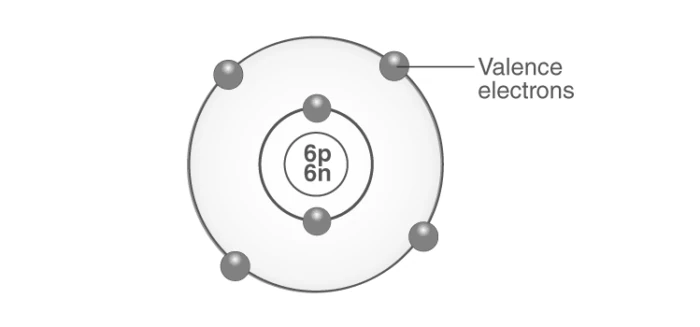
Illustration of Valence Electrons in an Atom
For instance, nitrogen forms various compounds with hydrogen such as NH3, N2H4, and N3H, where the nitrogen atoms exhibit valencies of 3, 2, and 1/3 respectively. This variability led to refining the definition of valency as the number of bonds an atom forms in a molecule rather than a fixed number.
Example: Consider oxygen, which has six electrons in its outer shell. To complete its octet, it typically forms two bonds, giving it a valency of 2.
Determining the Valency of Elements
Methods to Calculate Valency
The valency of an element depends on the number of electrons in its outermost shell and how it attains a stable electronic configuration. For example, hydrogen has one electron in its valence shell and tends to lose or share this electron, resulting in a valency of 1. Magnesium, with two valence electrons, usually loses both to achieve stability, so its valency is 2.
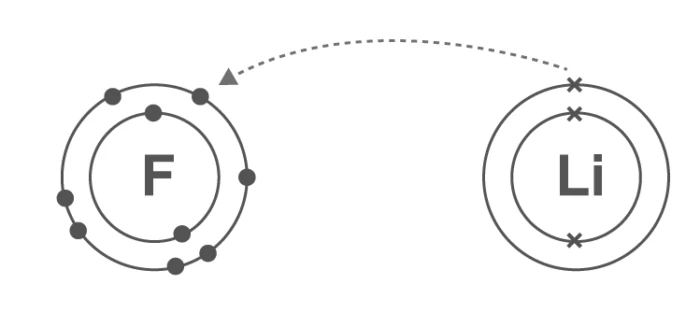
Elements with nearly full valence shells, like fluorine with seven electrons, tend to gain electrons to complete their octet. Fluorine gains one electron, so its valency is 1. Elements in the same group of the periodic table generally share the same valency due to similar valence electron configurations.
Valency Trends Across the Periodic Table
For example, noble gases in group 18 have full valence shells with eight electrons, making their valency zero as they rarely form bonds.
Example: Chlorine has seven valence electrons and tends to gain one electron to complete its octet, so its valency is 1.
Distinguishing Valency from Oxidation Number
Clarifying the Differences
While valency indicates the number of bonds an atom forms, it does not carry a positive or negative sign. In contrast, the oxidation number represents the hypothetical charge an atom would have if all bonds were ionic, and it can be positive, negative, or zero.
For example, nitrogen has a valency of 3, but its oxidation states can range from -3 to +5 depending on the compound. Understanding this distinction is essential for correctly interpreting chemical reactions and bonding.
Example: In ammonia (NH3), nitrogen has a valency of 3, but its oxidation number is -3.
Practical Application: Valency of Phosphorus in Compounds
Step-by-Step Calculation of Valency
Phosphorus pentoxide (P2O5) consists of two phosphorus atoms bonded with five oxygen atoms. To find the valency of phosphorus in this compound, we analyze the total valency units contributed by oxygen and distribute them among phosphorus atoms.
Problem: Determine the valency of phosphorus in phosphorus pentoxide (P2O5).
Solution:
Oxygen typically has a valency of 2. Since there are 5 oxygen atoms, total valency units from oxygen are:
\[ 5 \times 2 = 10 \]
These valency units are balanced by 2 phosphorus atoms, so valency per phosphorus atom is:
\[ \frac{10}{2} = 5 \]
Therefore, the valency of phosphorus in P2O5 is 5.
Summary Table: Valency of Selected Elements
Element | Symbol | Valency | Typical Bonding Behavior |
|---|---|---|---|
Hydrogen | H | 1 | Forms one bond by sharing or losing one electron |
Oxygen | O | 2 | Forms two bonds to complete octet |
Nitrogen | N | 3 | Forms three bonds, variable oxidation states |
Fluorine | F | 1 | Gains one electron to complete octet |
Magnesium | Mg | 2 | Loses two electrons to attain stability |
Phosphorus | P | 3 or 5 | Forms three or five bonds depending on compound |
Chlorine | Cl | 1 | Gains one electron to complete octet |
Neon | Ne | 0 | Full valence shell, inert |
Sulfur | S | 2, 4, or 6 | Variable valency depending on compound |
Carbon | C | 4 | Forms four covalent bonds |
Glossary of Key Terms
Term | Definition |
|---|---|
Valency | The number of chemical bonds an atom can form. |
Valence Electrons | Electrons present in the outermost shell of an atom. |
Octet Rule | Atoms tend to have eight electrons in their valence shell for stability. |
Oxidation Number | The hypothetical charge of an atom in a compound. |
Electron Shell | Energy levels around the nucleus where electrons reside. |
Periodic Table | Arrangement of elements based on atomic number and properties. |
Noble Gases | Elements with full valence shells, chemically inert. |
Covalent Bond | Bond formed by sharing electrons between atoms. |
Electron Gain | Process of an atom acquiring electrons to complete its octet. |
Electron Loss | Process of an atom losing electrons to achieve stability. |
Frequently Asked Questions
What is valency with an example?
Valency is the number of bonds an atom can form. For example, oxygen has a valency of 2 because it forms two bonds to complete its octet.
Can valency be negative?
Valency itself does not have a sign; it only indicates bonding capacity. However, the charge on an atom (oxidation state) can be positive or negative.
Why is valency important in chemistry?
Valency helps predict how atoms combine to form molecules, guiding the understanding of chemical reactions and compound formation.
Why does nitrogen have a valency of 5 in some compounds?
Nitrogen can exhibit valencies of 3 or 5 depending on the bonding situation, as it can use electrons from both 2s and 2p orbitals to form bonds.
How do you calculate the valency of an element?
Valency is calculated by the number of electrons lost, gained, or shared to complete the octet, often determined by the element’s position in the periodic table.