Comprehensive Guide to Complex Numbers
Fundamentals of Complex Numbers
Understanding the Nature of Complex Numbers
A complex number is expressed in the form \( p + iq \), where \( p \) and \( q \) are real numbers, and \( i \) is the imaginary unit defined by \( i = \sqrt{-1} \). In this expression, \( p \) is called the real part, denoted as \( \mathrm{Re}(z) \), and \( q \) is the imaginary part, denoted as \( \mathrm{Im}(z) \), of the complex number \( z = p + iq \).
This concept extends the real number system to include solutions to equations like \( x^2 + 1 = 0 \), which have no real roots.
Solution: The real part \( \mathrm{Re}(z) = 5 \) and the imaginary part \( \mathrm{Im}(z) = -2 \).
Operations and Algebraic Properties of Complex Numbers
Performing Addition, Subtraction, Multiplication, and Division
Given two complex numbers \( z_1 = p + iq \) and \( z_2 = m + in \), their algebraic operations are defined as follows:
- Addition: \( z_1 + z_2 = (p + m) + i(q + n) \)
- Subtraction: \( z_1 - z_2 = (p - m) + i(q - n) \)
- Multiplication: \( z_1 \cdot z_2 = (pm - nq) + i(pn + mq) \)
- Division: \[ \frac{z_1}{z_2} = \frac{p + iq}{m + in} = \frac{(p + iq)(m - in)}{m^2 + n^2} = \frac{pm + qn}{m^2 + n^2} + i \frac{qm - pn}{m^2 + n^2} \]
These operations follow the standard algebraic rules, with the key property \( i^2 = -1 \) used to simplify expressions.
Solution: Adding real parts: \( 3 + 1 = 4 \), adding imaginary parts: \( 2 + (-4) = -2 \).
Therefore, \( (3 + 2i) + (1 - 4i) = 4 - 2i \).
Special Identities and Powers of the Imaginary Unit
Key Formulas and Patterns in Complex Number Algebra
Complex numbers satisfy several important identities that simplify calculations:
- \( (z_1 + z_2)^2 = z_1^2 + z_2^2 + 2 z_1 z_2 \)
- \( (z_1 - z_2)^2 = z_1^2 + z_2^2 - 2 z_1 z_2 \)
- \( z_1^2 - z_2^2 = (z_1 + z_2)(z_1 - z_2) \)
- \( (z_1 + z_2)^3 = z_1^3 + z_2^3 + 3 z_1 z_2 (z_1 + z_2) \)
- \( (z_1 - z_2)^3 = z_1^3 - z_2^3 - 3 z_1 z_2 (z_1 - z_2) \)
The powers of \( i \) follow a cyclic pattern for any integer \( k \):
- \( i^{4k} = 1 \)
- \( i^{4k+1} = i \)
- \( i^{4k+2} = -1 \)
- \( i^{4k+3} = -i \)
Solution: Since \( 23 = 4 \times 5 + 3 \),
\( i^{23} = i^{4 \times 5 + 3} = i^{3} = -i \).
Modulus, Conjugate, and Polar Form of Complex Numbers
Geometric Interpretation and Polar Representation
The conjugate of a complex number \( z = p + iq \) is \( \bar{z} = p - iq \). The modulus (or absolute value) of \( z \) is given by:
\[ |z| = \sqrt{p^2 + q^2} \]
Expressing \( z \) in polar form involves representing it as:
\[ z = r (\cos \theta + i \sin \theta) \]
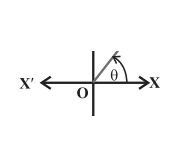
where \( r = |z| \) is the distance from the origin in the Argand plane, and \( \theta \) is the argument (angle) of \( z \), measured from the positive real axis.
Solution: Calculate modulus:
\[ r = \sqrt{1^2 + (\sqrt{3})^2} = \sqrt{1 + 3} = 2 \]
Find argument \( \theta \):
\[ \cos \theta = \frac{1}{2}, \quad \sin \theta = \frac{\sqrt{3}}{2} \]
Thus, \( \theta = \frac{\pi}{3} \).
Polar form:
\[ z = 2 \left( \cos \frac{\pi}{3} + i \sin \frac{\pi}{3} \right) \]
Practical Applications: Solved Problems on Complex Numbers
Determining Unknowns from Complex Equations
When given an equation involving complex numbers, equate the real and imaginary parts separately to find unknown variables.
Solution: Equate real parts:
\( 5x = 7 \implies x = \frac{7}{5} \).
Equate imaginary parts:
\( 4x - y = -8 \implies y = 4x + 8 \).
Substitute \( x \):
\( y = 4 \times \frac{7}{5} + 8 = \frac{28}{5} + 8 = \frac{28}{5} + \frac{40}{5} = \frac{68}{5} \).
Therefore, \( x = \frac{7}{5} \) and \( y = \frac{68}{5} \).
Expressing Products of Complex Numbers in Standard Form
Use \( i^2 = -1 \) to simplify products involving imaginary units and express the result as \( a + ib \).
Solution:
Expand:
\[ (-\sqrt{2})(3 \sqrt{2}) + (-\sqrt{2})(-i) + i \sqrt{5} (3 \sqrt{2}) - i \sqrt{5} (i) \]
Calculate each term:
\[ -3 \times 2 + i \sqrt{2} + 3 i \sqrt{10} - i^2 \sqrt{5} \]
Since \( i^2 = -1 \),
\[ -6 + i \sqrt{2} + 3 i \sqrt{10} + \sqrt{5} \]
Group real and imaginary parts:
\[ (-6 + \sqrt{5}) + i (\sqrt{2} + 3 \sqrt{10}) \]
Finding the Multiplicative Inverse of a Complex Number
The multiplicative inverse of \( z = p + iq \) is given by:
\[ z^{-1} = \frac{\bar{z}}{|z|^2} = \frac{p - iq}{p^2 + q^2} \]
Solution:
Conjugate: \( \bar{z} = 3 + 4i \).
Modulus squared:
\[ |z|^2 = 3^2 + (-4)^2 = 9 + 16 = 25 \]
Therefore:
\[ z^{-1} = \frac{3 + 4i}{25} = \frac{3}{25} + i \frac{4}{25} \]
Summary Table for Quick Revision
| Concept | Definition / Formula |
|---|---|
| Complex Number | \( z = p + iq \), where \( i = \sqrt{-1} \) |
| Real Part | \( \mathrm{Re}(z) = p \) |
| Imaginary Part | \( \mathrm{Im}(z) = q \) |
| Addition | \( (p + iq) + (m + in) = (p + m) + i(q + n) \) |
| Multiplication | \( (p + iq)(m + in) = (pm - nq) + i(pn + mq) \) |
| Division | \( \frac{p + iq}{m + in} = \frac{pm + qn}{m^2 + n^2} + i \frac{qm - pn}{m^2 + n^2} \) |
| Conjugate | \( \bar{z} = p - iq \) |
| Modulus | \( |z| = \sqrt{p^2 + q^2} \) |
| Polar Form | \( z = r (\cos \theta + i \sin \theta) \) |
| Power of \( i \) | Cycle: \( i^{4k} = 1, i^{4k+1} = i, i^{4k+2} = -1, i^{4k+3} = -i \) |
Glossary of Key Terms
| Term | Meaning |
|---|---|
| Complex Number | A number of the form \( p + iq \) where \( p, q \in \mathbb{R} \) and \( i = \sqrt{-1} \) |
| Real Part | The component \( p \) in \( p + iq \) |
| Imaginary Part | The component \( q \) in \( p + iq \) |
| Imaginary Unit | Symbol \( i \) satisfying \( i^2 = -1 \) |
| Conjugate | Complex number \( \bar{z} = p - iq \) corresponding to \( z = p + iq \) |
| Modulus | Distance from origin: \( |z| = \sqrt{p^2 + q^2} \) |
| Argument | Angle \( \theta \) made with positive real axis in Argand plane |
| Polar Form | Representation \( z = r(\cos \theta + i \sin \theta) \) |
| Multiplicative Inverse | Number \( z^{-1} \) such that \( z z^{-1} = 1 \) |
| Argand Plane | Graphical representation of complex numbers on a plane |
Frequently Asked Questions
What is the significance of the imaginary unit \( i \)?
The imaginary unit \( i \) allows the extension of real numbers to complex numbers, enabling solutions to equations like \( x^2 + 1 = 0 \) which have no real roots.
How do you add two complex numbers?
Add their real parts and imaginary parts separately: \( (p + iq) + (m + in) = (p + m) + i(q + n) \).
What is the geometric meaning of the modulus of a complex number?
The modulus represents the distance of the complex number from the origin in the Argand plane.
How is the conjugate of a complex number useful?
The conjugate helps in rationalizing denominators and finding the multiplicative inverse of complex numbers.
What is the polar form of a complex number?
It expresses a complex number in terms of its modulus and argument as \( z = r(\cos \theta + i \sin \theta) \), useful for multiplication and division.