Understanding Molecular Orbital Theory and Its Applications
Fundamentals of Molecular Orbital Theory
Conceptual Overview of Molecular Orbitals
Molecular Orbital Theory (MOT) was introduced in the early 1900s by F. Hund and R. S. Mulliken to provide a more comprehensive explanation of chemical bonding than the valence-bond theory. Unlike valence-bond theory, which struggles to explain molecules with bonds of intermediate order such as resonance structures, MOT describes bonding by considering electrons as delocalized over the entire molecule. This approach accounts for molecular geometry and electronic properties more accurately.
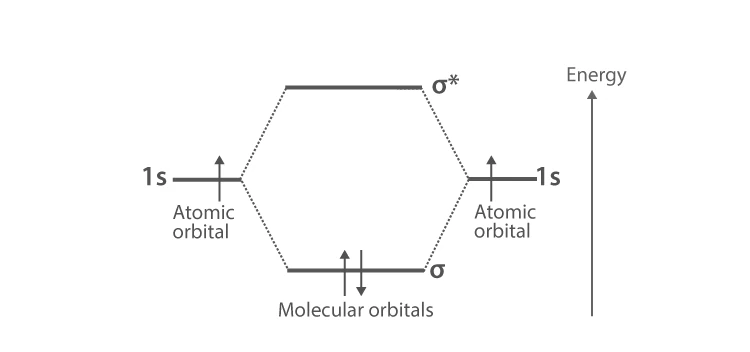
According to MOT, molecular orbitals are formed by combining atomic orbitals from the bonded atoms. The total number of molecular orbitals generated equals the sum of the atomic orbitals involved. These molecular orbitals are classified as bonding, anti-bonding, or non-bonding, each differing in energy and electron distribution.
Electrons occupy these molecular orbitals starting from the lowest energy level, following the Aufbau principle. The most effective orbital combinations occur when the atomic orbitals have similar energies and compatible symmetries.
In essence, MOT treats electrons as spread over the entire molecule rather than localized between two atoms, providing a more accurate depiction of electron behavior in molecules.
Solution: Since each atom contributes one atomic orbital, the total number of molecular orbitals formed will be two. These will be one bonding molecular orbital (lower energy) and one anti-bonding molecular orbital (higher energy). Electrons will fill the bonding orbital first, stabilizing the molecule.
Linear Combination of Atomic Orbitals and Formation Conditions
Mechanism of Orbital Combination
Molecular orbitals arise from the linear combination of atomic orbitals (LCAO). This method approximates molecular orbitals by adding or subtracting atomic orbital wave functions. Constructive interference (addition) leads to bonding orbitals with increased electron density between nuclei, while destructive interference (subtraction) results in anti-bonding orbitals with nodes and decreased electron density.
For effective orbital combination, three key conditions must be met:
- Comparable Energy Levels: Atomic orbitals must have similar energies to combine effectively. For example, 2p orbitals combine well with other 2p orbitals but not with 1s orbitals due to energy differences.
- Symmetry Alignment: Orbitals must share the same symmetry about the molecular axis. For instance, 2pz orbitals combine with 2pz orbitals but not with 2px or 2py orbitals.
- Proper Spatial Overlap: Adequate overlap between orbitals is essential to form stable molecular orbitals, increasing electron density between nuclei.
Solution: The 1s and 2p orbitals differ significantly in energy and symmetry. The 1s orbital is spherical and lower in energy, while the 2p orbital has directional lobes and higher energy. Due to these differences, their wave functions do not overlap constructively, preventing effective molecular orbital formation.
Classification and Characteristics of Molecular Orbitals
Types and Properties of Molecular Orbitals
Molecular orbitals are categorized into three main types based on their electron distribution and energy:
- Bonding Molecular Orbitals: Formed by constructive interference, these orbitals have increased electron density between nuclei, leading to attractive forces that stabilize the molecule. They possess lower energy than the original atomic orbitals.
- Anti-bonding Molecular Orbitals: Resulting from destructive interference, these orbitals have decreased electron density between nuclei and contain nodes. Electrons here cause repulsion, destabilizing the bond, and these orbitals have higher energy than the atomic orbitals.
- Non-bonding Molecular Orbitals: These orbitals arise when atomic orbitals do not combine due to symmetry or energy incompatibility. Electrons in these orbitals neither stabilize nor destabilize the molecule.
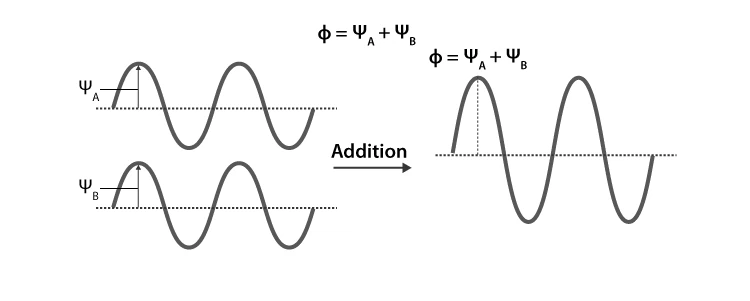
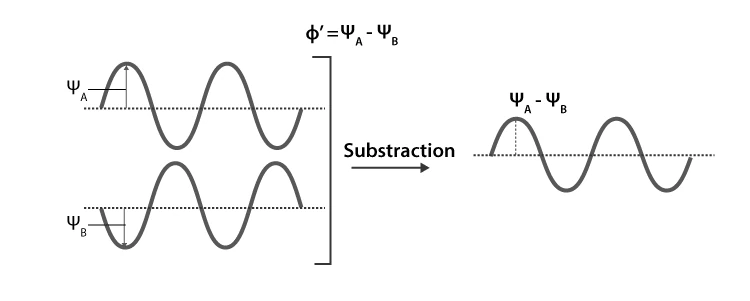
Solution: In bonding orbitals, electrons are attracted to both nuclei, increasing stability and lowering energy. In anti-bonding orbitals, electron density is reduced between nuclei, causing nuclear repulsion and destabilization, which raises the energy level of these orbitals.
Comparative Analysis and Practical Implications of Molecular Orbitals
Distinguishing Bonding and Anti-bonding Orbitals
The energy difference between bonding and anti-bonding molecular orbitals is crucial in determining molecular stability. The energy decrease in bonding orbitals is termed stabilization energy, while the increase in anti-bonding orbitals is called destabilization energy.
Electrons fill molecular orbitals following three fundamental principles:
- Aufbau Principle: Orbitals fill from lowest to highest energy.
- Pauli Exclusion Principle: No two electrons share the same set of quantum numbers.
- Hund’s Rule: Electrons occupy degenerate orbitals singly before pairing.
Solution: The molecular orbital configuration of O2 includes two unpaired electrons in the anti-bonding π* orbitals. The presence of unpaired electrons makes O2 paramagnetic, meaning it is attracted to magnetic fields.
Summary Table: Key Points of Molecular Orbital Theory
| Aspect | Description |
|---|---|
| Number of Molecular Orbitals | Equals the total atomic orbitals combined |
| Types of Molecular Orbitals | Bonding, Anti-bonding, Non-bonding |
| Energy Order | Bonding < Atomic Orbitals < Anti-bonding |
| Electron Filling Rules | Aufbau, Pauli Exclusion, Hund’s Rule |
| Conditions for Orbital Combination | Similar energy, symmetry, and proper overlap |
| Effect of Electrons in Bonding Orbitals | Stabilizes molecule by increasing electron density between nuclei |
| Effect of Electrons in Anti-bonding Orbitals | Destabilizes molecule by reducing electron density and increasing repulsion |
| Electron Delocalization | Electrons are spread over the entire molecule, not localized |
| Symmetry Axis | Usually the z-axis for orbital symmetry considerations |
| Applications | Explains bond order, magnetism, and molecular stability |
Glossary of Essential Terms
| Term | Definition |
|---|---|
| Atomic Orbital | A region around an atom where an electron is likely to be found |
| Bonding Molecular Orbital | Orbital formed by constructive interference, stabilizing the molecule |
| Anti-bonding Molecular Orbital | Orbital formed by destructive interference, destabilizing the molecule |
| Non-bonding Molecular Orbital | Orbital that does not affect bond strength, formed when orbitals do not combine |
| Linear Combination of Atomic Orbitals (LCAO) | Method of constructing molecular orbitals by adding atomic orbitals |
| Aufbau Principle | Rule stating electrons fill orbitals from lowest to highest energy |
| Pauli Exclusion Principle | No two electrons can have identical quantum numbers in an atom or molecule |
| Hund’s Rule | Electrons occupy degenerate orbitals singly before pairing |
| Stabilization Energy | Energy decrease due to electron occupation of bonding orbitals |
| Destabilization Energy | Energy increase due to electron occupation of anti-bonding orbitals |
Frequently Asked Questions
What distinguishes molecular orbitals from atomic orbitals?
Molecular orbitals extend over the entire molecule and result from the combination of atomic orbitals, whereas atomic orbitals are localized around individual atoms.
Why do bonding orbitals have lower energy than anti-bonding orbitals?
Because bonding orbitals increase electron density between nuclei, leading to attraction and stabilization, while anti-bonding orbitals reduce this density, causing repulsion and higher energy.
Can atomic orbitals of different energies combine to form molecular orbitals?
Effective combination requires atomic orbitals to have similar energies; large energy differences prevent significant overlap and combination.
How does molecular orbital theory explain paramagnetism in molecules?
Molecules with unpaired electrons in molecular orbitals exhibit paramagnetism, as these unpaired electrons interact with magnetic fields.
What role does symmetry play in molecular orbital formation?
Only atomic orbitals with compatible symmetry about the molecular axis can combine effectively to form molecular orbitals.