Comprehensive Guide to Coordination Compounds
Fundamentals of Coordination Chemistry
Understanding Coordination Entities and Their Components
Coordination compounds, also known as coordination complexes, are chemical species where a central atom or ion is surrounded by molecules or ions called ligands. These ligands attach to the central atom through coordinate covalent bonds, where both electrons in the bond originate from the ligand. Typically, the central atom is a transition metal, acting as a Lewis acid by accepting electron pairs from ligands.
The central atom or ion, often a metal, is termed the coordination center. The number of ligand attachments to this center is called the coordination number, which corresponds to the total sigma bonds formed. The entire assembly of the central atom and its bound ligands, including the overall charge, is known as the coordination sphere. This sphere is usually enclosed in square brackets in chemical notation.
Coordination polyhedra describe the spatial arrangement of ligands around the central atom, commonly adopting shapes like tetrahedral or square planar geometries. The oxidation state of the central atom is determined by considering the charge after removing the electron pairs donated by ligands.
Example Problem
Determine the coordination number and oxidation state of the central metal in the complex \([Cr(NH_3)_4Cl_2]^+\).
Solution:
The ligands are 4 ammonia molecules and 2 chloride ions, so the coordination number is \(4 + 2 = 6\).
Let the oxidation state of chromium be \(x\).
Ammonia is neutral, chloride has a charge of \(-1\), and the overall charge is \(+1\).
Setting up the equation:
\[ x + 4(0) + 2(-1) = +1 \]
\[ x - 2 = +1 \implies x = +3 \]
Thus, the coordination number is 6 and the oxidation state of chromium is +3.
Classification of Coordination Complexes
Coordination compounds can be categorized based on the nature of their ligands and charge:
- Cationic complexes: The coordination sphere carries a positive charge, e.g., \([Co(NH_3)_6]Cl_3\).
- Anionic complexes: The coordination sphere is negatively charged, e.g., \(K_4[Fe(CN)_6]\).
- Neutral complexes: The coordination sphere is electrically neutral, e.g., \([Ni(CO)_4]\).
- Homoleptic complexes: Contain only one type of ligand, e.g., \(K_4[Fe(CN)_6]\).
- Heteroleptic complexes: Contain different types of ligands, e.g., \([Co(NH_3)_5Cl]SO_4\).
- Mononuclear complexes: Contain a single metal ion, e.g., \(K_4[Fe(CN)_6]\).
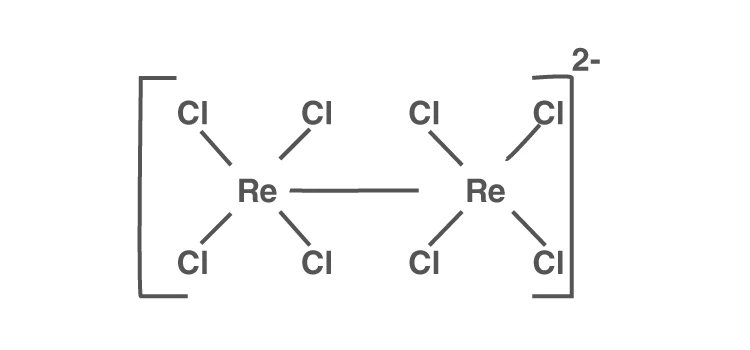
- Polynuclear complexes: Contain multiple metal ions.
Systematic Naming and Ligand Characteristics
Principles of IUPAC Nomenclature for Coordination Compounds
The naming of coordination compounds follows specific IUPAC rules to ensure clarity and uniformity:
- Ligands are named before the central metal atom or ion.
- Ligands are listed alphabetically, ignoring numerical prefixes.
- Numerical prefixes such as di-, tri-, tetra- indicate the number of identical ligands; bis-, tris- are used for polydentate ligands.
- Anionic ligands end with the suffix ‘-o’ (e.g., chloride becomes chlorido, sulfate becomes sulfato).
- Common neutral ligands have special names: NH₃ is ammine, H₂O is aqua, CO is carbonyl, NO is nitrosyl.
- The metal name follows the ligands; if the complex is anionic, the metal name ends with ‘-ate’ (often using Latin names).
- The oxidation state of the metal is indicated in Roman numerals within parentheses.
- If counter ions are present, the cation is named before the anion.
Example Problem
Provide the IUPAC name for the complex \([Ni(CN)_4]^{2-}\).
Solution:
The ligands are cyanide ions (CN⁻), named as cyano.
There are four cyanide ligands, so the prefix is tetra-.
The complex is anionic, so nickel is named as nickelate.
The oxidation state of nickel is +2.
Therefore, the name is tetra-cyano nickelate (II) ion.
Varieties and Roles of Ligands in Complexes
Ligands are atoms, ions, or molecules that donate electron pairs to the central metal atom or ion, forming coordinate bonds. They act as Lewis bases and can be classified based on their bonding and denticity:
- Anionic ligands: Negatively charged, e.g., \(Cl^-\), \(CN^-\).
- Cationic ligands: Positively charged, e.g., \(NO^+\).
- Neutral ligands: No charge, e.g., \(NH_3\), \(H_2O\), \(CO\).
- Unidentate ligands: Bind through a single donor atom, e.g., \(NH_3\), \(Cl^-\).
- Bidentate ligands: Attach via two donor atoms, e.g., ethane-1,2-diamine, oxalate ion.
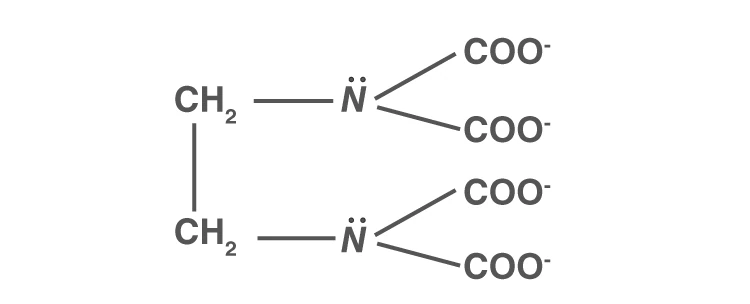
- Polydentate ligands: Possess multiple donor atoms, e.g., EDTA (ethylene diamine tetraacetate).
- Ambidentate ligands: Can bind through two different atoms, e.g., thiocyanate (SCN⁻) binds via sulfur or nitrogen.
- Chelate ligands: Polydentate ligands that form ring structures with the metal ion, enhancing stability.
Isomerism and Theoretical Foundations in Coordination Chemistry
Exploring Isomerism in Coordination Complexes
Isomers are compounds with identical molecular formulas but different atomic arrangements. Coordination compounds exhibit two main types of isomerism:
- Stereoisomerism: Same bonds but different spatial arrangements, subdivided into:
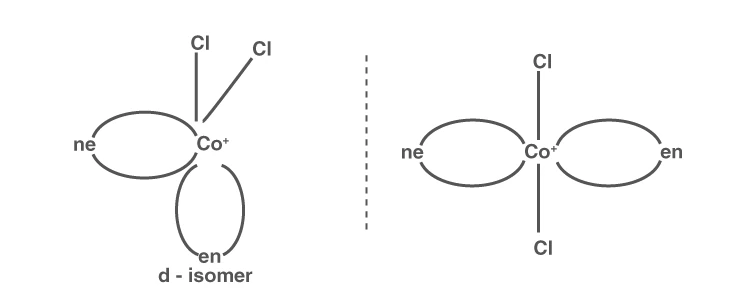
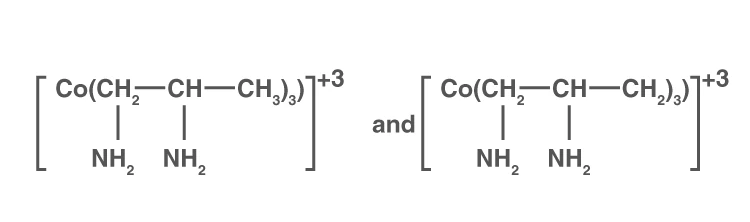
- Optical isomerism: Non-superimposable mirror images called enantiomers, which rotate plane-polarized light in opposite directions.
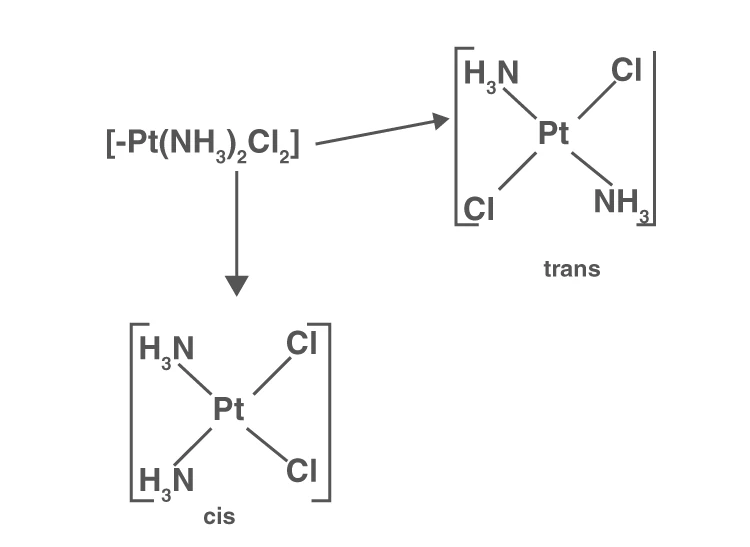
- Geometrical isomerism: Different spatial arrangements of ligands, such as cis and trans forms, especially in complexes with coordination numbers 4 and 6.
- Structural isomerism: Different connectivity of atoms, including:
- Linkage isomerism: Ambidentate ligands bind through different atoms.
- Coordination isomerism: Ligand exchange between cationic and anionic parts.
- Ionization isomerism: Counter ions replace ligands.
- Solvate isomerism: Variation in solvent molecules attached.
- Ligand isomerism: Different isomeric forms of ligands themselves.
Werner’s Coordination Theory and Its Insights
Alfred Werner proposed a foundational theory in 1898 to explain the structure of coordination compounds. His experiments demonstrated that metal ions exhibit two types of valencies:
- Primary valency: Ionizable valency satisfied by negative ions (counter ions).
- Secondary valency: Non-ionizable valency corresponding to the coordination number, satisfied by ligands.
Werner’s theory also introduced the concept of coordination polyhedra, describing the fixed spatial arrangement of ligands around the metal center. Complexes are represented with the coordination sphere in square brackets, and counter ions outside.
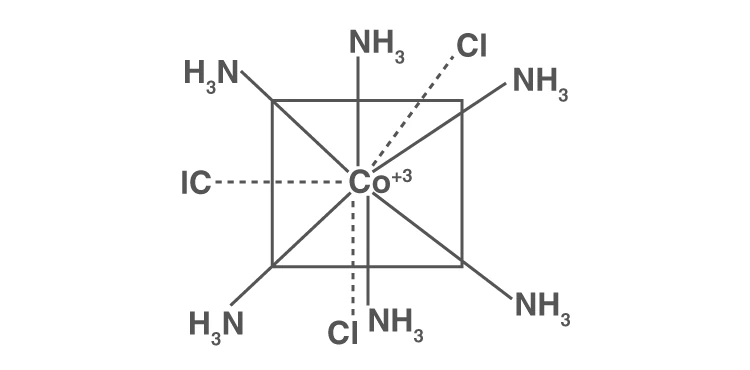
Note: Werner’s theory does not account for magnetic, optical, or color properties, nor does it explain the directional nature of bonds or complex stability.
Effective Atomic Number (EAN) Concept for Stability
The Effective Atomic Number rule, proposed by Sidgwick, states that a coordination complex is stable if the total number of electrons around the central metal ion (its own electrons plus those donated by ligands) equals the atomic number of the nearest noble gas.
Example Problem
Calculate the effective atomic number of the iron ion in the complex \(K_4[Fe(CN)_6]\).
Solution:
Iron in this complex is in the +2 oxidation state, so it has \(26 - 2 = 24\) electrons.
Each cyanide ligand donates 2 electrons, and there are 6 cyanide ligands:
\[ 6 \times 2 = 12 \text{ electrons} \]
Total electrons around iron:
\[ 24 + 12 = 36 \]
The nearest noble gas with atomic number 36 is krypton, indicating the complex's stability.
Magnetic Behavior, Stability, and Practical Uses of Coordination Complexes
Magnetic Characteristics of Coordination Compounds
Coordination complexes exhibit magnetic properties depending on the presence of unpaired electrons in the central metal ion:
- Paramagnetic complexes: Contain unpaired electrons and are attracted by magnetic fields.
- Diamagnetic complexes: Have all electrons paired and are weakly repelled by magnetic fields.
The magnetic moment (\(\mu\)) of a complex can be calculated using the spin-only formula:
\[ \mu = \sqrt{n(n+2)} \text{ Bohr Magneton (BM)} \]
where \(n\) is the number of unpaired electrons.
Factors Influencing Complex Stability
The stability of coordination complexes depends on several factors:
- Smaller size and higher positive charge of the central metal ion increase stability.
- Greater crystal field stabilization energy (CFSE) enhances stability.
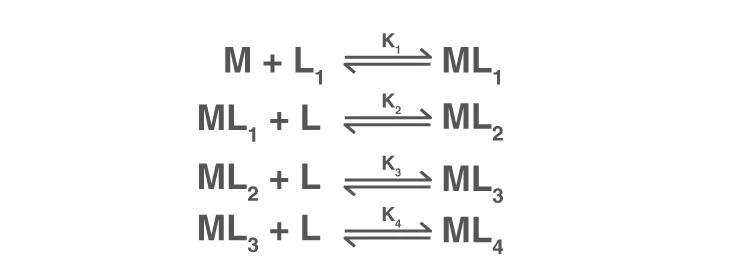
- Complexes with chelating (polydentate) ligands are more stable due to ring formation.
- Octahedral complexes tend to be more stable than tetrahedral ones.
Applications of Coordination Compounds in Various Fields
Coordination compounds have diverse applications due to their unique properties:
- Industrial uses: Their vivid colors are exploited in dyes and pigments.
- Electroplating and photography: Complexes with cyanide ligands are used in metal plating and photographic processes.
- Metallurgy: Extraction of metals like nickel and cobalt involves coordination complexes.
- Biological significance: Hemoglobin contains an iron coordination complex; vitamin B12 contains a cobalt complex.
- Medical applications: Cisplatin, a platinum coordination complex, is used in cancer treatment.
Summary Table for Quick Revision
| Concept | Key Points |
|---|---|
| Coordination Number | Number of ligand attachments to central atom (sigma bonds) |
| Ligands | Electron pair donors; classified as unidentate, bidentate, polydentate, ambidentate |
| Isomerism | Stereoisomerism (optical, geometrical) and structural isomerism (linkage, coordination, ionization, solvate, ligand) |
| Werner’s Theory | Primary (ionizable) and secondary (coordination) valencies; spatial arrangement of ligands |
| Effective Atomic Number | Sum of metal electrons and ligand electrons; stability if equals nearest noble gas atomic number |
| Magnetic Properties | Paramagnetic (unpaired electrons), diamagnetic (all paired); magnetic moment formula \(\mu = \sqrt{n(n+2)}\) |
| Stability Factors | Small size, high charge, CFSE, chelation, octahedral geometry |
| Nomenclature | Ligands named first alphabetically; metal named with oxidation state; anionic complexes end with -ate |
| Applications | Colorants, electroplating, metallurgy, biology (hemoglobin, vitamin B12), medicine (cisplatin) |
Glossary of Key Terms
| Term | Definition |
|---|---|
| Coordination Compound | A chemical species with a central atom bonded to ligands via coordinate covalent bonds. |
| Ligand | Atom, ion, or molecule donating an electron pair to the central atom. |
| Coordination Number | Number of ligand attachments to the central atom. |
| Coordination Sphere | The central atom and its attached ligands, including charge, enclosed in brackets. |
| Oxidation State | Charge on the central atom after accounting for ligand electron donation. |
| Homoleptic Complex | Complex with only one type of ligand. |
| Heteroleptic Complex | Complex with different types of ligands. |
| Isomerism | Compounds with the same formula but different arrangements of atoms. |
| Paramagnetism | Magnetic property due to unpaired electrons. |
| Effective Atomic Number | Total electrons around the metal ion including ligand contributions. |
Frequently Asked Questions
What is the shape of the complex \([Cu(NH_3)_2]^+\)?
The complex \([Cu(NH_3)_2]^+\) has a linear geometry due to coordination number 2.
How is the complex \(K_3[Fe(CN)_6]\) named according to IUPAC?
Its IUPAC name is potassium hexacyanoferrate (III), indicating six cyanide ligands and iron in +3 oxidation state.
Why is \([Fe(H_2O)_6]^{3+}\) strongly paramagnetic while \([Fe(CN)_6]^{3-}\) is weakly paramagnetic?
\([Fe(H_2O)_6]^{3+}\) has five unpaired electrons due to weak field water ligands, making it strongly paramagnetic. \([Fe(CN)_6]^{3-}\) has strong field cyanide ligands causing electron pairing, resulting in only one unpaired electron and weak paramagnetism.
Calculate the oxidation state of platinum in \([PtCl_4]^{2-}\).
Let the oxidation state be \(x\). Chloride ions contribute \(-1\) each, total \(-4\). The complex charge is \(-2\).
\[ x - 4 = -2 \implies x = +2 \]
Give examples of strong and weak field ligands.
Strong field ligands include CO and CN⁻; weak field ligands include NH₃ and H₂O.