Understanding Electric Power and Its Applications
Fundamentals of Electric Power
Concept and Significance of Electric Power
Electric power quantifies how quickly electrical energy is transferred or converted within a circuit over time. It essentially measures the speed at which energy is consumed or work is performed electrically. The standard unit for electric power is the watt (W), which corresponds to one joule of energy used per second. This concept is crucial in understanding how devices operate and how energy is managed in electrical systems.
Electric power is typically generated by sources such as batteries or electric generators and is fundamental to powering countless electrical appliances and systems.
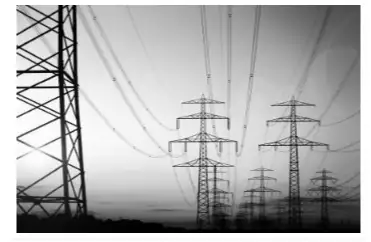
Diagram representing electric power flow in a circuit
Example Problem
A 12 V battery is connected to a resistor with a resistance of 15 Ω. Calculate the current flowing through the resistor and the power dissipated.
Solution:
Using Ohm's law, current \( I \) is given by:
\[ I = \frac{V}{R} = \frac{12}{15} = 0.8 \text{ A} \]
Power \( P \) consumed by the resistor is:
\[ P = VI = 12 \times 0.8 = 9.6 \text{ W} \]
Thus, the resistor carries a current of 0.8 amperes and dissipates 9.6 watts of power.
Mathematical Expression of Electric Power
The electric power in a circuit can be calculated using the relationship between voltage and current. The fundamental formula is:
\[ P = VI \]
where:
\( P \) is the power in watts (W)
\( V \) is the potential difference across the circuit in volts (V)
\( I \) is the current flowing through the circuit in amperes (A)
By applying Ohm's law, which states \( V = IR \), power can also be expressed in terms of current and resistance or voltage and resistance:
\[ P = I^2 R \quad \text{or} \quad P = \frac{V^2}{R} \]
This flexibility allows calculation of power depending on the known quantities in a circuit.
Example Problem
A circuit has a voltage of 24 V and a resistance of 8 Ω. Determine the power consumed by the circuit.
Solution:
First, calculate the current using Ohm's law:
\[ I = \frac{V}{R} = \frac{24}{8} = 3 \text{ A} \]
Then, power is:
\[ P = I^2 R = 3^2 \times 8 = 9 \times 8 = 72 \text{ W} \]
The circuit consumes 72 watts of power.
Relationship Between Power, Energy, and Time
Calculating Energy from Power and Duration
Since power represents the rate of energy usage, the total energy consumed over a period can be found by multiplying power by the time interval. The formula connecting energy and power is:
\[ E = Pt \]
where:
\( E \) is the energy in joules (J)
\( P \) is the power in watts (W)
\( t \) is the time in seconds (s)
Alternatively, energy can also be expressed in terms of charge and voltage as:
\[ E = QV \]
where \( Q \) is the electric charge in coulombs (C) and \( V \) is the potential difference in volts (V).
Example Problem
An electric device operates at a power of 50 W for 3 minutes. Calculate the total energy consumed by the device.
Solution:
Convert time to seconds:
\[ t = 3 \times 60 = 180 \text{ s} \]
Calculate energy:
\[ E = Pt = 50 \times 180 = 9000 \text{ J} \]
The device uses 9000 joules of energy during this period.
Understanding the Role of Charge and Voltage in Energy
Energy can also be understood as the product of the electric charge moved through a potential difference. This perspective is useful in circuits where charge flow and voltage are known:
\[ E = QV \]
This formula highlights that energy depends on both the amount of charge transferred and the voltage across which it moves.
Example Problem
A charge of 5 coulombs passes through a potential difference of 12 volts. Find the energy transferred.
Solution:
Using the formula:
\[ E = QV = 5 \times 12 = 60 \text{ J} \]
The energy transferred is 60 joules.
Practical Applications and Safety Considerations
Common Uses and Importance of Electric Power
Electric power is essential for operating household appliances, industrial machines, and electronic devices. Understanding how power works helps in designing efficient circuits and managing energy consumption effectively.
It is also critical in electrical safety, as improper handling can lead to hazards.
Safety Precautions When Handling Electrical Devices
One important safety rule is to avoid touching electrical equipment with wet hands. Water is a good conductor of electricity, and moisture increases the risk of electric shock by providing a path for current to flow through the body.
Safety Tip: Always ensure your hands are dry before operating electrical devices to prevent accidents and injuries.
Warning sign illustrating electrical safety precautions
Example Problem
Explain why it is dangerous to handle electrical appliances with wet hands.
Answer:
Water conducts electricity, increasing the risk of electric shock.
Wet hands lower the resistance of the skin, allowing current to pass more easily.
Electric shock can cause injury or even be fatal.
Dry hands act as an insulator, reducing the chance of current flow through the body.
Quick Reference: Key Formulas and Units
Quantity | Formula | Unit |
|---|---|---|
Electric Power | \( P = VI \) | Watt (W) |
Power using Current and Resistance | \( P = I^2 R \) | Watt (W) |
Power using Voltage and Resistance | \( P = \frac{V^2}{R} \) | Watt (W) |
Energy from Power and Time | \( E = Pt \) | Joule (J) |
Energy from Charge and Voltage | \( E = QV \) | Joule (J) |
Ohm's Law | \( V = IR \) | Volt (V), Ampere (A), Ohm (Ω) |
Glossary of Important Terms
Term | Definition |
|---|---|
Electric Power | The rate at which electrical energy is transferred or converted in a circuit. |
Watt (W) | The SI unit of power, equal to one joule per second. |
Voltage (V) | The electric potential difference between two points in a circuit. |
Current (I) | The flow of electric charge through a conductor, measured in amperes. |
Resistance (R) | The opposition to the flow of current in a circuit, measured in ohms. |
Energy (E) | The capacity to do work, measured in joules in electrical contexts. |
Charge (Q) | The quantity of electricity transported, measured in coulombs. |
Ohm's Law | The relationship \( V = IR \) connecting voltage, current, and resistance. |
Joule (J) | The SI unit of energy or work done. |
Scalar Quantity | A physical quantity that has magnitude but no direction, such as power. |
Frequently Asked Questions
What is the definition of electric power?
Electric power is the rate at which electrical energy is transferred or converted in a circuit, measured in watts.
Which unit is used to measure electric power?
The SI unit of electric power is the watt (W), equivalent to one joule per second.
What is the formula for calculating electric power?
Electric power is calculated using \( P = VI \), where \( V \) is voltage and \( I \) is current.
Is electric power a scalar or vector quantity?
Electric power is a scalar quantity because it has magnitude but no direction.
How can power be expressed using Ohm’s law?
Using Ohm’s law \( V = IR \), power can be written as \( P = I^2 R \) or \( P = \frac{V^2}{R} \).